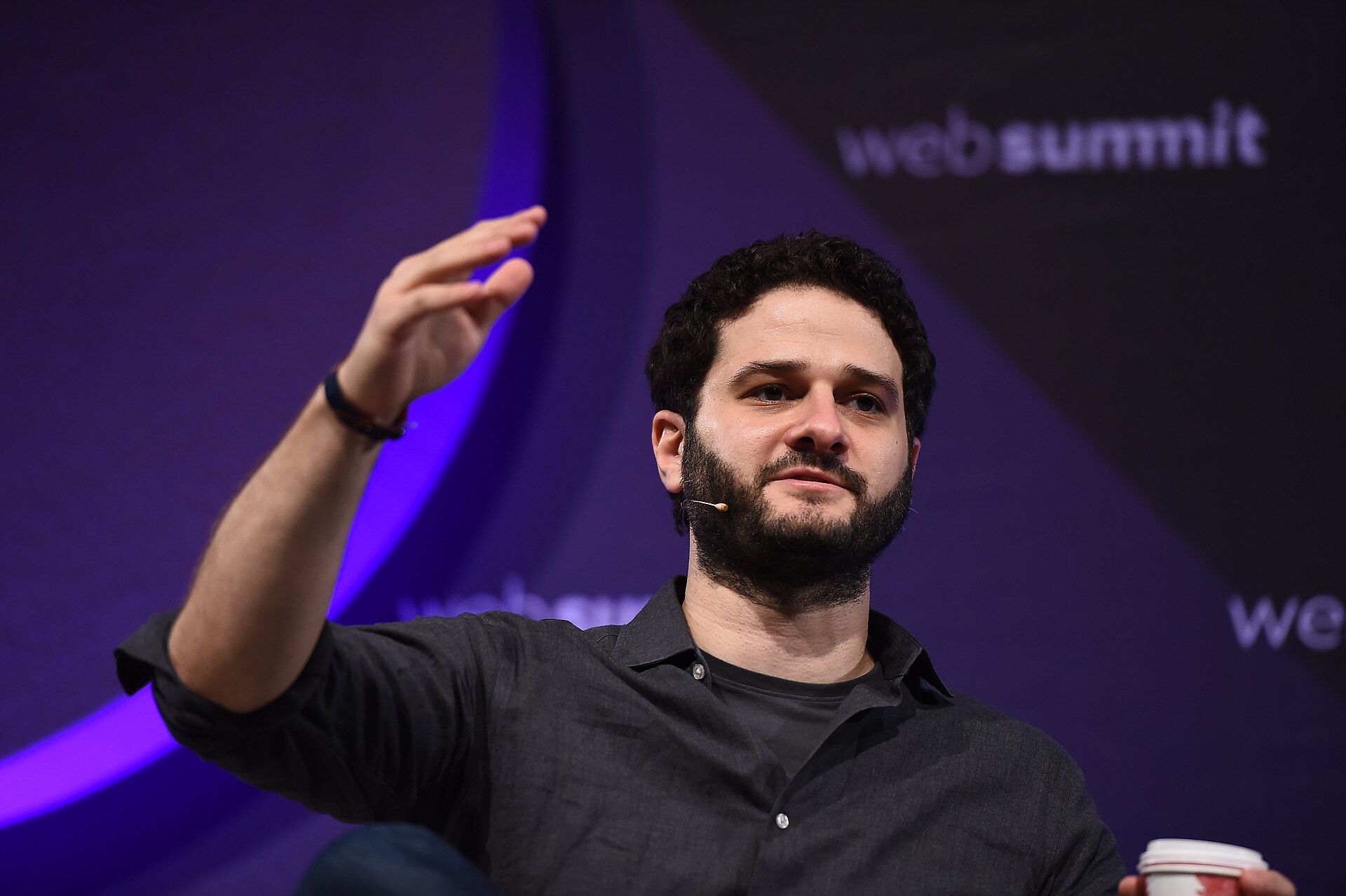
How Dustin Moskovitz Leverages Philanthropic Efforts to Assert Role in Shaping AI's Regulatory Future Amid Ideological Battle
Dustin Moskovitz is best known as the co-founder of Facebook and work management platform Asana, through which he and his wife, Cari Tuna, have amassed an estimated fortune of $20 billion. Moskovitz has used this fortune to make strategic investments, including into AI company Anthropic, a stake that was recently valued at $500 million; as well as more than $4 billion in grants through Coefficient Giving and its sister organization Good Ventures, both of which Moskovitz and Tuna founded and of which they are the primary funders (Tuna stated that Moskovitz's investment in Anthropic was moved into a non-profit vehicle in early-2025 to "dispel any perception of conflict of interest" and to allow any financial returns to be donated to philanthropic cause).
Moskovitz has also been a prolific Democratic donor, having donated $50 million between August and October 2024 to support the presidential campaigns of Joe Biden and Kamala Harris, and made donations of $10,000 to each of the 50 state Democratic parties.
Disguising Self-Interest with Altruism and Building an Ideological Battlefield
Moskovitz, and Coefficient Giving, have long been associated with the Effective Altruist movement: a philosophical and social movement that encourages followers to donate to causes that will, in their opinion, provide the greatest total good for humanity. Many Effective Altruists embrace a "doomer" ideology, contending that unrestrained AI development poses an existential threat to humanity. As such, many Effective Altruists who hold this "doomer" ideology work for companies and organizations that research AI and attempt to align AI with human goals.
Coefficient Giving recently rebranded from Open Philanthropy, the name it had held since 2014. Nearly all of the money donated through Coefficient Giving has been from Moskovitz's and Tuna's personal fortune. Of the $4 billion Coefficient Giving has donated, a substantial amount has gone to support organizations and individuals who share Effective Altruism's "doomer" ideology.
According to its website, Coefficient Giving currently manages 13 different funds, including a fund titled "Navigating Transformative AI", through which Coefficient Giving makes grants to "reduce the risk of global catastrophe and help society prepare for major advances in AI." The organization discloses on its website that it has made more than 485 grants through this fund, totaling more than $570 million. The vast majority of these grants have gone towards AI researchers, AI safety-focused organizations, and university researchers and research centers focused on AI.
The largest of these recipients include the Center for Security and Emerging Technology at Georgetown University, which has received over $101 million from Coefficient Giving and purports to provide "decision-makers with data-driven analysis on the security implications of emerging technologies," namely AI, "advanced computing," and "biotechnology"; FAR.AI, which has received close to $60 million from Coefficient Giving, and which conducts research and hosts workshops in furtherance of its goal of "ensuring advanced AI is safe and beneficial for everyone"; and the University of California, Berkeley, specifically its Center for Human-Compatible AI, which has received over $17 million in funding from Coefficient Giving, strives to make AI systems safer and more different to humans, run by prominent AI researcher and skeptic Stuart Russell.
Anthropic and FTX Bound by Ties to Leading Effective Altruists
Some of the organizations to which Moskovitz and Coefficient Giving have made grants also received money from perhaps the most prominent Effective Altruist, Sam Bankman-Fried, who ran the now failed FTX cryptocurrency exchange and is currently serving 25 years in prison for fraud. Indeed, The New York Times credited Bankman-Fried with the popularization of Effective Altruism, noting that the "ideology rose to prominence largely through the efforts of Sam Bankman-Fried." Like Moskovitz, Bankman-Fried and FTX were early investors in Anthropic, as The New York Times noted that, by the time FTX failed, "Mr. Bankman-Fried and his colleagues had fed at least $500 million into Anthropic." This was part of a larger effort by Bankman-Fried to invest in "A.I.-related companies, academic labs, think tanks, independent projects and individual researchers to address concerns over the technology."
Moskovitz's Money Permeates Washington Think Tanks and Congressional Offices
Coefficient Giving has not only made grants to AI safety-related organizations, but has also made grants to groups, and fellowships, in the AI policymaking space. These include the aforementioned Center for Security and Emerging Technology, which reportedly placed several former staffers into AI-related policymaking positions in the Biden White House; RAND Corporation, a think tank to which Coefficient Giving has contributed more than $42 million; and the Horizon Institute for Public Service, which, according to Politico, Coefficient Giving "effectively created" and which has funded the salaries of legislative staffers that have worked specifically on AI policies.
Coefficient Giving has also directly lobbied federally in support of Effective Altruist causes, namely "U.S. foreign assistance policies and programs, with a focus on cost-effectiveness and innovation." Additionally, Coefficient Giving has made millions of dollars in grants to organizations, such as the Center for AI Safety and Americans for Responsible Innovation, that have themselves spent millions lobbying Congress on legislation to regulate AI.
In addition to its grants to AI "doomer" organizations, Coefficient Giving has given hundreds of millions of dollars to explicitly Effective Altruist groups. Among these are Effective Ventures Foundation and constituent entities Centre for Effective Altruism and Effective Altruism Funds, to which Coefficient Giving has donated nearly $200 million; and Effective Altruist job board 80,000 Hours, to which Coefficient Giving has granted nearly $40 million.
Moskovitz's Philanthropic Endgame Appears to be Picking Winners and Losers in an Ideological AI Battle
Coefficient Giving's focus on AI safety, and any potential AI regulations, would appear to favor Anthropic, which represents itself as the AI company most focused on safety. As mentioned above, Moskovitz was an early investor in Anthropic and he has remained active in the governance of the company, stating in May 2024 that he was a "board observer" and, on an October 2025 podcast, that he was "in the boardroom" at Anthropic (We note that Coefficient Giving contributed $30 million to OpenAI's controlling non-profit in 2017 although Forbes wrote that "neither the couple [Moskovitz and Tuna] nor their foundation own a stake in OpenAI" as of November 2025). To further illustrate the ties between Coefficient Giving and Anthropic, Anthropic's co-founder Daniela Amodei is married to Coefficient Giving's former CEO, and current Anthropic employee, Holden Karnofsky.
Moskovitz has shown no signs of slowing down his contributions to AI safety organizations as Coefficient Giving disclosed nearly $50 million in grants within its Navigating Transformative AI fund in the last four months of 2025. Moskovitz has continued his cautionary tone on AI as, on an October 2025 podcast, he said that he thinks AI technologies are "really dangerous" and companies should slow down development because he believes "we're going to have something pretty bad happen and I think that will cause a chilling effect and I think that will be bad for Asana and bad for the labs."